Creating the Right Atmosphere in Every Space
Music is an important part of the restaurant experience. It helps establish the atmosphere, supports a restaurant’s identity, and can make a dining room feel more inviting. But getting the sound right takes more than installing a few speakers and turning up the volume.
Modern restaurants often have several areas with different needs. A bar may need enough volume to support a lively atmosphere. Dining areas should allow guests to talk comfortably. Outdoor patios need coverage that accounts for open air and surrounding noise. Each space has its own acoustic challenges, and the audio system needs to account for them. A distributed audio system gives restaurants more control over how sound is delivered throughout the building.
What Is a Distributed Audio System?
A distributed audio system uses multiple speakers positioned throughout a building or outdoor area to provide sound coverage across different spaces. Instead of relying on one or two loudspeakers to fill an entire restaurant, the system distributes audio closer to where guests are sitting or gathering.
Most commercial restaurant audio systems are divided into zones. Each zone represents an area that can be managed independently or grouped with other areas.
For example, a restaurant might have separate zones for:
This arrangement gives staff more flexibility. The bar can have a livelier music level while the dining room stays quieter. Outdoor speakers can operate independently, or the patio can be grouped with the indoor areas when the restaurant wants consistent background music throughout the property.
The number of zones and how they operate depend on the layout and daily needs of the business.
Why Restaurant Audio Needs More Than Speaker Coverage
One of the biggest mistakes in restaurant audio design is assuming that more volume will solve poor coverage. It usually doesn't.
When speakers are too far apart, guests may experience areas where music is barely audible alongside other areas where it is uncomfortably loud. Raising the volume to compensate can make the problem worse. A properly designed distributed audio system focuses on even coverage. Speakers are placed strategically so guests can hear music at a comfortable level without relying on excessive volume.
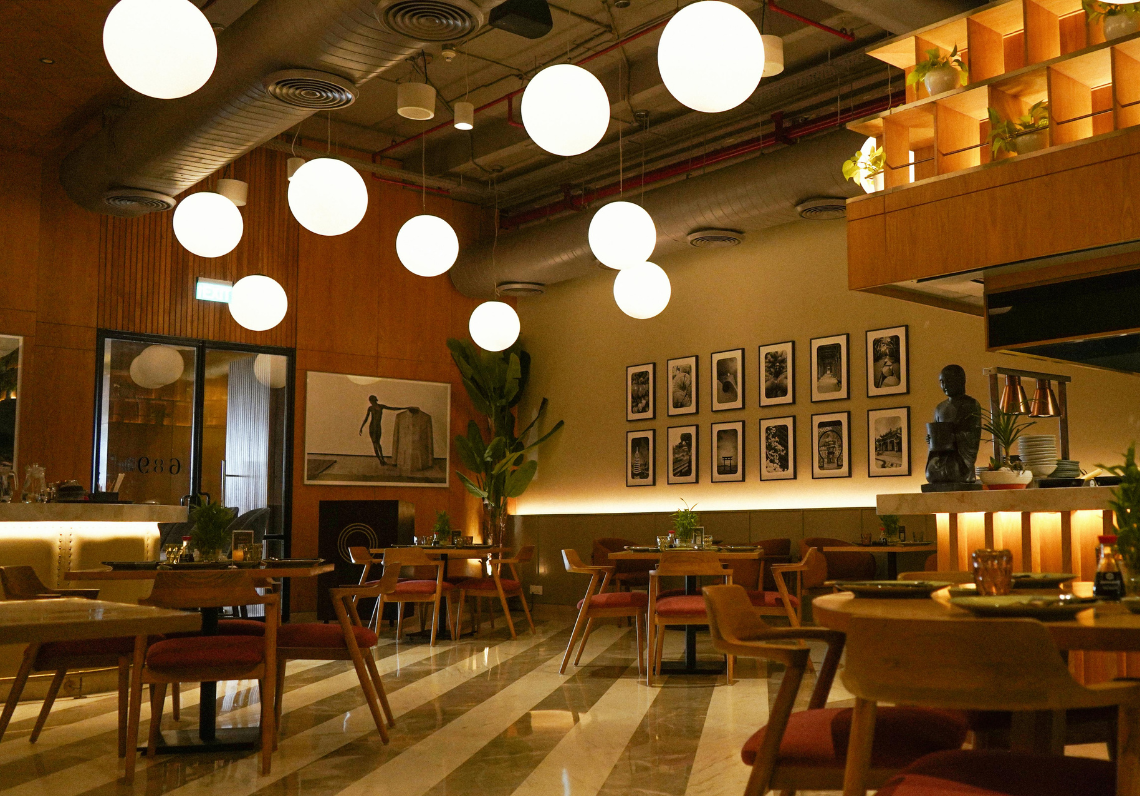
This becomes especially important in restaurants with open ceilings, glass walls, concrete floors, exposed structural elements, and outdoor seating. These features can affect how sound travels and reflects throughout a space. Speaker placement also needs to account for the building's appearance. Restaurants invest heavily in their interior design, so loudspeakers should be positioned to provide good coverage without interfering with lighting, architectural features, or the overall aesthetic. In some spaces, that means using ceiling speakers. In others, surface-mounted or larger loudspeakers may be a better fit. Outdoor areas may require weather-resistant speakers mounted beneath covered patios or awnings.
The right approach depends on the architecture and how each area is used.
How Audio Zones Make Restaurant Operations Easier
A modern restaurant audio system should be straightforward for employees to use. Staff members shouldn't need to understand audio engineering to adjust the music before opening or lower the volume during a busy dinner service. A centralized control system gives authorized staff a convenient place to manage volume and audio settings. Depending on the system design, employees can adjust individual zones or control several areas together. For example, a manager might lower the dining room volume during lunch while keeping the bar at its normal level. During a private event, the restaurant could group multiple zones so the same music plays throughout the space.
Audio processing also plays an important role. A digital signal processor, or DSP, manages how audio signals are routed and adjusted before they reach the amplifiers and speakers. It can help organize multiple sources and zones while giving the integrator control over how the system behaves. Platforms such as Q-SYS and Tesira provide centralized audio processing and control capabilities. This type of system is useful in restaurants that need multiple zones today and may want to add more areas or equipment later.
Choosing the Right Speakers for Each Area
Not every restaurant area needs the same type of loudspeaker. Speaker selection should reflect the size of the space, ceiling height, mounting options, expected listening levels, and the type of atmosphere the restaurant wants to create.
Smaller speakers can work well in dining areas where background music should remain comfortable and unobtrusive. Larger loudspeakers may be needed in open spaces with high ceilings or greater coverage requirements. Outdoor speakers introduce additional considerations. They need to be appropriate for the environment and positioned to cover guest seating without directing unnecessary sound toward neighboring properties.
The goal isn't simply to make music audible everywhere. It's to make it sound appropriate for the space. A good restaurant audio design also considers how speakers work together. Their locations, coverage patterns, and output levels should be planned as part of the complete system rather than treated as individual installation decisions.
Flatlands Bar & Grill: Distributed Audio Designed Around the Space
Orlando, Florida | Flamingo Crossings near Walt Disney World
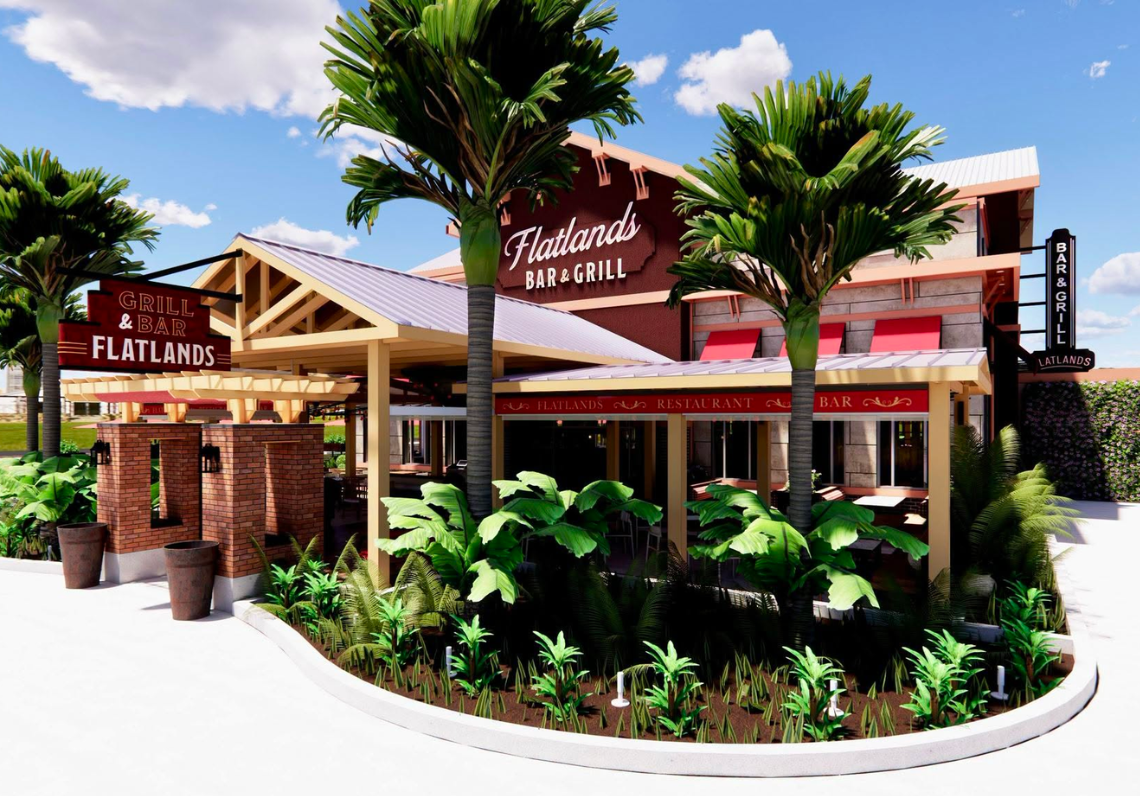
Teer Audio Visual applied these principles during the installation of the distributed audio system at Flatlands Bar & Grill in the Flamingo Crossings area near Walt Disney World.
As a new restaurant concept, Flatlands needed an audio system that could support the atmosphere throughout its bar, dining areas, and outdoor spaces. The main challenge was providing even sound coverage across a building with high ceilings, a large glass wall, and several architectural features that influenced speaker placement. Decorative light fixtures, exposed beams, and hanging ladders made it important to plan speaker locations carefully. Some of the larger loudspeakers needed to be mounted to structural I-beams. Outside, speakers were positioned beneath the awnings to provide coverage for the patio areas.
Teer Audio Visual installed Electro-Voice EVID 6.2 and 4.2 loudspeakers throughout the space. These speakers were selected and positioned according to the coverage needs of each area. The system uses a Q-SYS Core processor to manage the audio and provide centralized control across multiple zones. This gives the restaurant a practical way to manage its music without requiring staff to operate separate equipment in different parts of the building. The design also leaves room for additional zones and subwoofers as the restaurant's needs change. The project also included LG televisions in the bar area for sports, events, and other programming. Netgear networking equipment supports the system infrastructure. (Learn more by clicking here)
One of the most important results was improving audio distribution throughout the restaurant. Guests can enjoy music across the different areas without the system relying on a few loudspeakers playing at excessive volume. The installation also reflects an important part of restaurant AV design: the technology needs to work with the architecture rather than compete with it.
What Restaurant Owners Should Consider Before Installing an Audio System
Before choosing speakers or audio equipment, restaurant owners should think about how guests and staff use each area. A dining room, bar, and outdoor patio may all need different volume levels and control options. The building itself matters just as much. Ceiling height, glass, exposed structure, mounting surfaces, and seating arrangements all influence the design. For new construction, AV planning should happen early enough to coordinate speaker locations and infrastructure with the other trades.
It's also important to consider who will operate the system. A well-designed restaurant audio system should make everyday adjustments simple. Staff should be able to manage the music without needing to understand the equipment behind it. Finally, equipment selection should support the overall experience rather than drive the design. Investing in high-quality speakers is important, but their placement and configuration have just as much influence on the finished result.
Teer Audio Visual designs and installs commercial audio systems for restaurants and hospitality businesses throughout Orlando and Central Florida. From new restaurant construction to AV upgrades, our team helps businesses plan audio distribution around their building, their customers, and the way they operate.
Planning a restaurant or hospitality project? Contact Teer Audio Visual to discuss distributed audio, commercial AV design, and integration for your space.